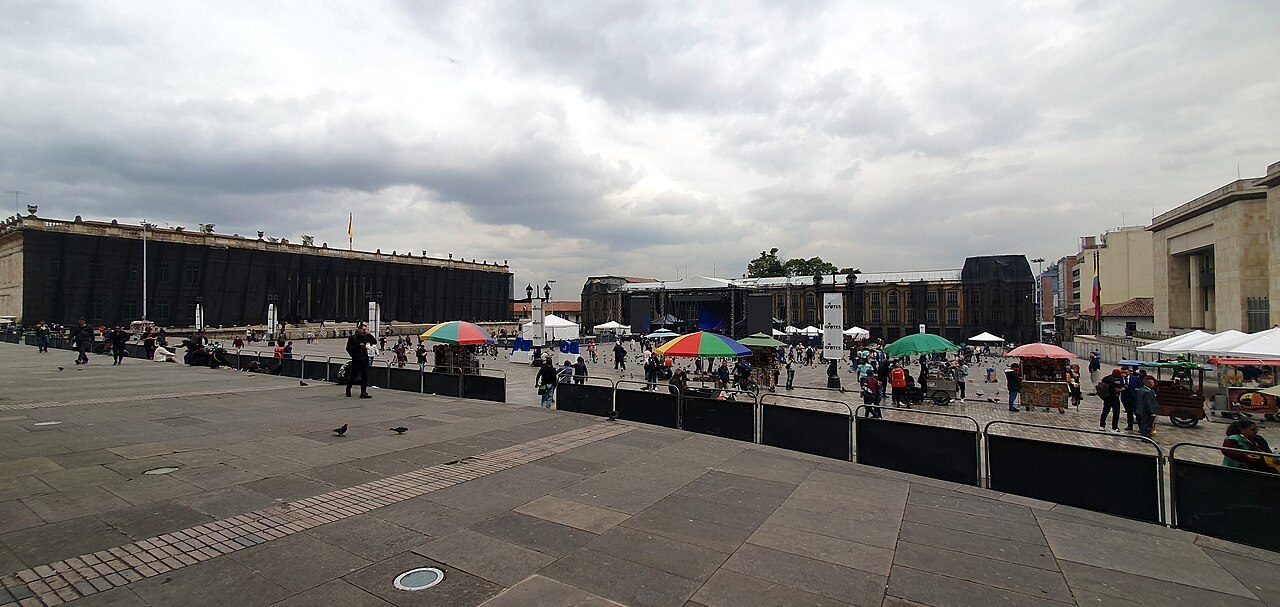
Colombia gives police more power to break up violent protests
Colombia changed its rules for how police handle protests, giving officers more room to act against violence and roadblocks, the AP reported. Critics fear the change will lead to more police violence. The rules took effect as opposition groups marched against the president.
Colombia's government has changed its rules for how police respond to street protests, giving officers more leeway to break up protests where people damage property or block roads, the Associated Press reported.
President Abelardo de la Espriella, a conservative, signed the order, called Decree 1525, on Tuesday, the newspaper El Universal reported. It changes a 2021 rule that put dialogue and mediation first.
Under the new rules, police can act right away against people who commit violence, while talks continue with peaceful protesters, El Universal said. Talking first is no longer a step police must take before stepping in against violent individuals, the decree says.
The decree lists cases where police may act, El Universal reported. They include carrying guns, knives or explosives, holding people against their will, attacking officers, medics or journalists, and destroying property.
Blocking roads does not by itself make a protest violent, the decree says. Police may break up a roadblock only in rare cases, when the disruption is serious and lasting and there is no gentler option.
The decree keeps a ban on police using guns at protests, and it bars the military from stepping in, the president's office said.
Activists and opposition politicians criticized the changes, the AP reported. They fear officers could read the rules broadly, leading to more police violence.
Legal experts are already questioning whether the decree is constitutional, Caracol Radio reported. Colombia's Constitution says only laws passed by Congress can limit the right to protest.
The rules took effect on Wednesday, the same day opposition parties held marches against the government, Caracol said.
What we know: Colombia's new decree lets police act faster against violent protesters.
What we don't: Whether courts will uphold the decree.
Where outlets agree The AP and El Universal both report that Decree 1525 lets police act against violent protesters without first exhausting dialogue.
Where they differ The outlets cited here report the same key facts so far.