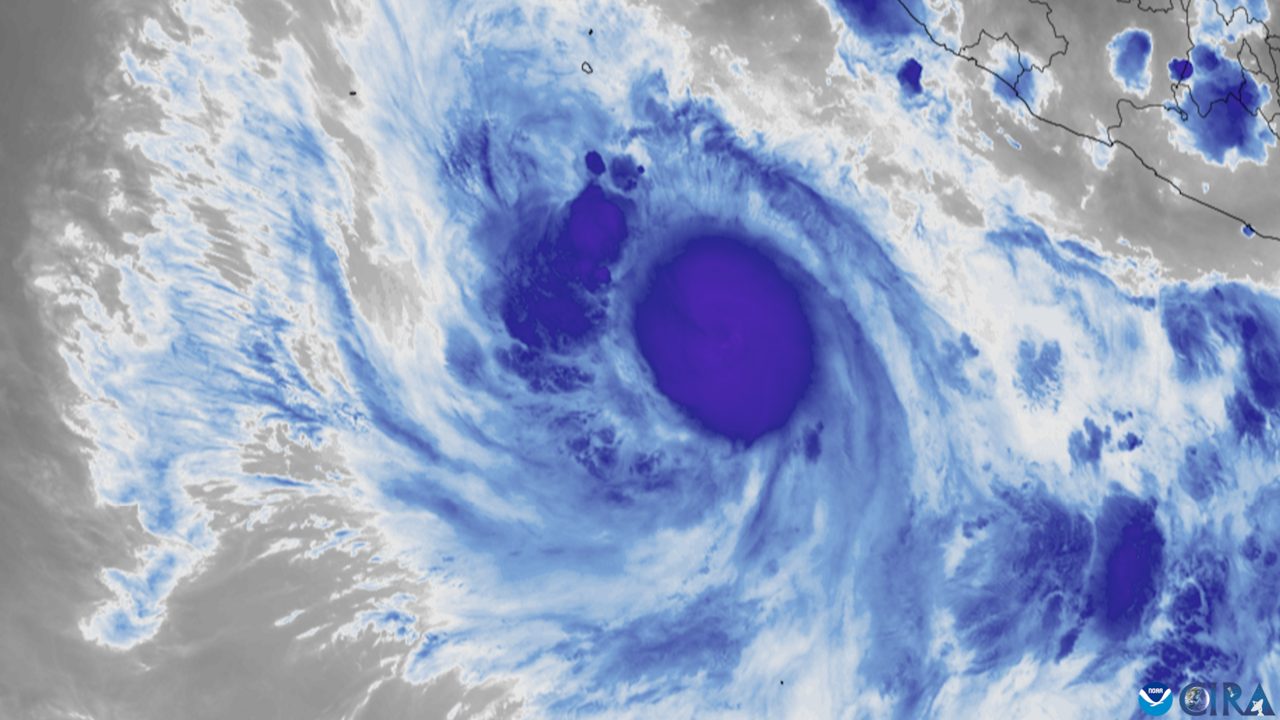
Pacific sets hurricane energy record as El Niño fuels storms
The Pacific east of the date line has broken a 2018 record for storm energy, scientists said, driven by a strong El Niño. The last five hurricanes there all became major storms. Meanwhile, the Atlantic has been unusually quiet this year, with storm energy at less than 18% of normal.
The Pacific Ocean east of the international date line has broken a record for powerful, long-lasting hurricanes, scientists said, CBS News and PBS NewsHour reported.
Scientists measure hurricane seasons with a number called accumulated cyclone energy, or ACE. It counts both a storm's wind speed and how long it lasts. The region passed the old record, set in 2018, on Sunday, said Phil Klotzbach of Colorado State University. Data from Colorado State showed ACE at 318.8 on Sunday, beating the 2018 mark of 318.1, The Weather Network reported. An average year produces about 132.7.
"Since September 20, when Odalys formed, it's been berserk," Klotzbach told the AP. The last five Pacific hurricanes, Nolo, Odalys, Polo, Rachel and Simon, all reached major status with winds of at least 111 mph. Polo set a record for time spent at Category 5, at two and a half days.
The main driver is El Niño, researchers said. It weakens the high winds that can tear storms apart in the Pacific. The water is also several degrees warmer than normal. "It feels like almost everything that can spin up does spin up," said Kim Wood of the University of Arizona, the AP reported.
The same pattern has kept the Atlantic quiet. Its storm energy is less than 18% of normal for this time of year.
Klotzbach counted all storms east of the date line. NOAA splits that area into two regions, and neither is at a record alone. More storms may come. Forecasters give a disturbance off Mexico a 90% chance of becoming Tropical Storm Trudy.
What we know: The eastern and central Pacific together have set a record for storm energy, helped by El Niño.
What we don't: How many more strong storms will form before the season ends.
Where outlets agree CBS News and The Weather Network both report that the Pacific passed the 2018 record for accumulated cyclone energy on Sunday, driven largely by El Niño.
Where they differ The outlets cited here report the same key facts so far.