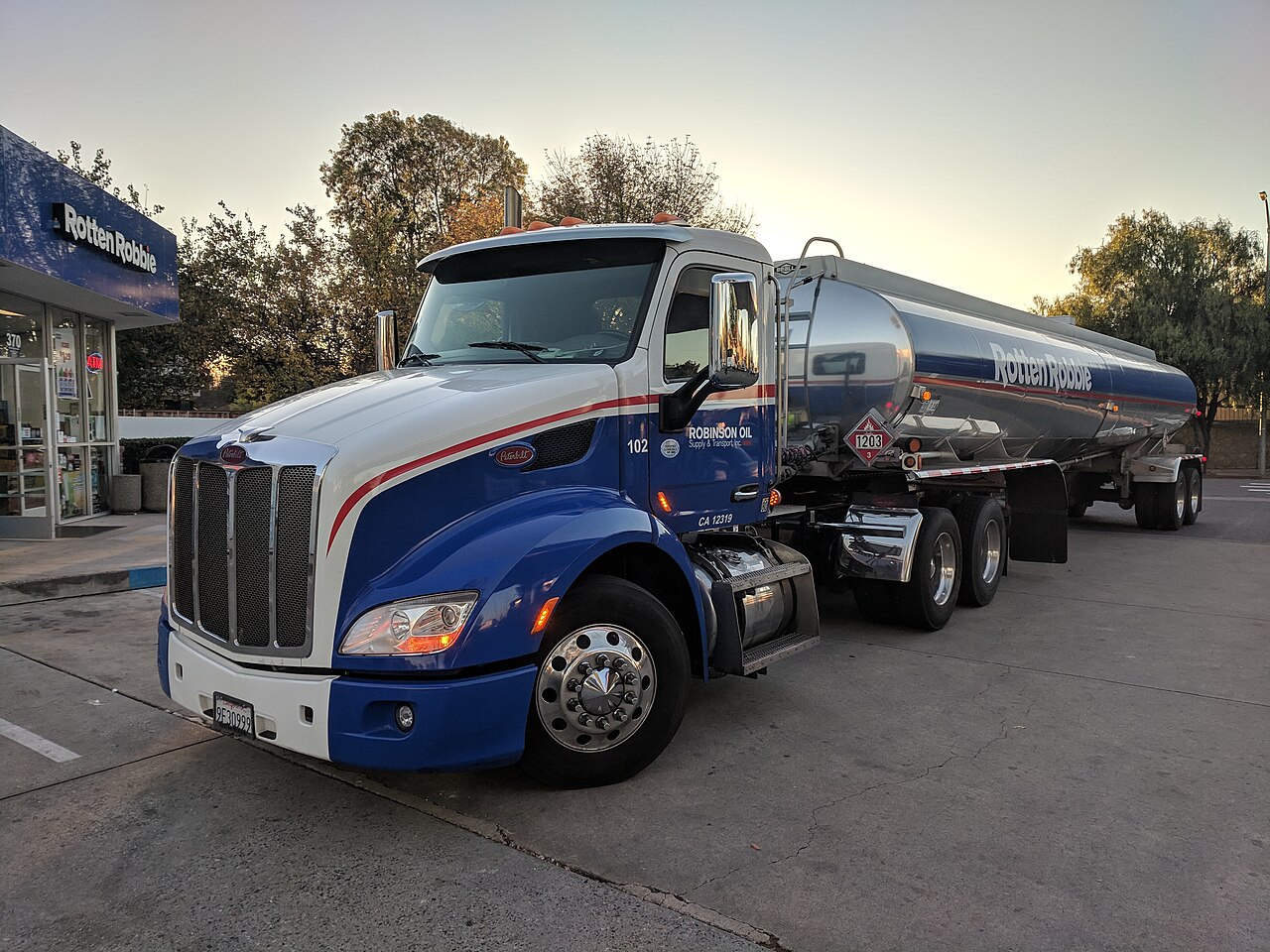
Bipartisan senators urge Trump to drop Russian diesel deal
A bipartisan group of senators, including four Republicans, asked the Trump administration on Sunday to reverse its deal to buy Russian diesel, saying it breaks a 2022 ban on Russian energy imports. President Trump says the fuel will cut prices. U.S. diesel averaged $6.23 a gallon on Friday, near its record.
A bipartisan group of senators, four of them Republicans, asked the Trump administration on Sunday to "immediately reverse course" on its deal to buy Russian diesel.
The senators said Congress banned Russian energy imports in 2022 to keep U.S. dollars from paying for the war in Ukraine. "President Trump's decision to allow Russian diesel imports to the U.S. runs directly counter to that law," they wrote. They said the White House did not consult Congress or file the justification the law requires. The Republicans who signed are Sens. Susan Collins, Lisa Murkowski, Thom Tillis and John Curtis. CNN counted seven senators on the statement, while the Washington Examiner, citing the AP, reported six.
President Donald Trump announced the deal Friday after a call with Russian President Vladimir Putin. He said Russia would supply more than 300,000 tons of diesel at once, 500,000 tons in November and 1 million tons after that. The Treasury Department issued a license letting companies trade Russian diesel without fear of U.S. sanctions.
Trump said lower prices for farmers, ranchers and truckers are his "Greatest Priority." The national average for diesel was $6.23 a gallon on Friday, according to AAA. It hit a record $6.52 on Sept. 22.
Treasury Secretary Scott Bessent defended the deal on "Fox News Sunday." "This is good for the American people," he said.
Many experts doubt it will lower prices much. CNN reported that energy analysts expect little effect on global diesel costs. Former U.S. officials told CNN it is unclear whether Russia even has that much diesel to sell.
Ukrainian President Volodymyr Zelenskyy called the deal "a weak decision." He said Russia would repay it "with further terror." The New York Post reported that Trump signed a Russia sanctions law on Sept. 18 that takes effect Oct. 19.
What we know: Trump announced Russian diesel purchases, Treasury cleared the trades, and a bipartisan group of senators says the deal breaks a 2022 law.
What we don't: When the first fuel would arrive, who is paying for it, and whether it will lower pump prices before the Nov. 3 election.
Where outlets agree CNN and the New York Post both report that Trump said Russia would supply more than 300,000 tons of diesel at once and 500,000 tons in November.
Where they differ CNN reports that seven senators signed the statement, while the Washington Examiner, citing the AP, reports six.