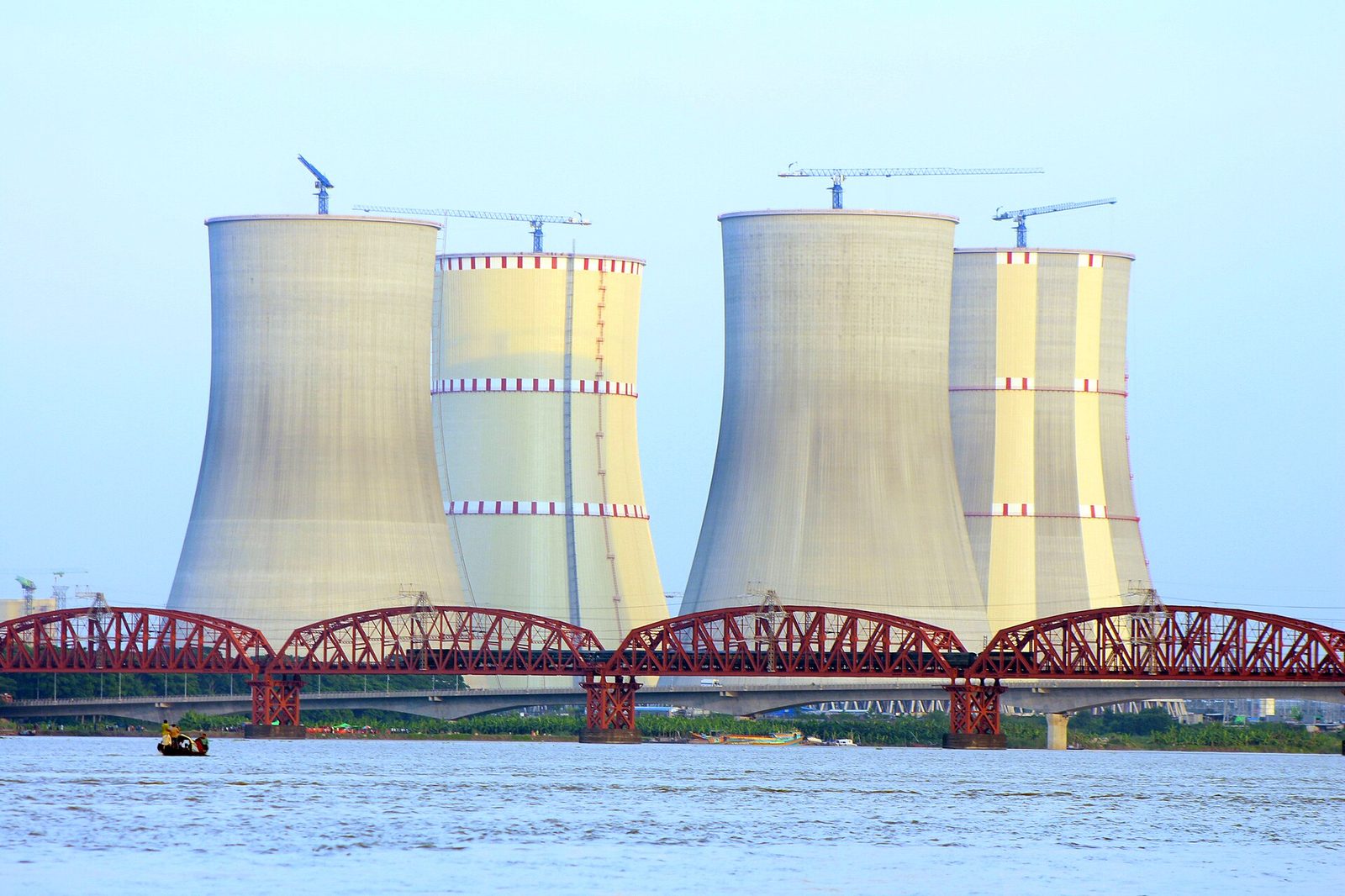
Bangladesh's first nuclear reactor starts its first chain reaction
The first reactor at Bangladesh's Rooppur nuclear plant started its first controlled chain reaction at 3:34 p.m. Sunday, Dhaka time, a top official said. The reactor is not making power yet. Officials said about 30 to 40 days of start-up tests come first, and then power will be raised step by step.
Unit 1 of the Rooppur Nuclear Power Plant, Bangladesh's first, began its first controlled nuclear chain reaction at 3:34 p.m. Sunday, Dhaka time, The Business Standard and The Daily Star reported. Md Anwar Hossain, the secretary of the Ministry of Science and Technology, confirmed the milestone to both outlets.
"Today at 3:34pm, we were able to achieve the chain reaction smoothly," Hossain told The Business Standard. He said the parameters were within the desired ranges and "the reactor was very stable." Work began the night before, and Russian and Bangladeshi experts watched the process, he said.
This step is called first criticality. It is the point when a reactor keeps a chain reaction going for the first time, at very low power. In the reaction, uranium atoms split and release heat. That heat turns water into high-pressure steam, which drives turbines to make electricity, the plant company's managing director told The Daily Star.
The reactor is not sending any power to the grid yet. The Business Standard called the reaction the first of four stages before power can be supplied. This start-up phase is expected to take about 30 to 40 days, project officials told The Daily Star. After that, power output will be raised gradually based on test results.
The country's nuclear regulator issued the license for this stage last Thursday. "As all tests were successfully completed following nuclear fuel loading... we permitted them to reach the B-2 stage," its chairman, Mahamudul Hasan, told The Daily Star. More approvals are needed before power generation can start, he said.
Power is now coming later than officials had hoped. When fuel loading began on April 28, they told The Business Standard that the first power could reach the grid in late July or early August.
Rooppur is being built in Pabna district with two Russian-designed reactors supplied by Rosatom. Each unit is designed to produce 1,200 megawatts, for a total of 2,400. The project's general contract, signed in 2015, is worth $12.65 billion, and the plant is expected to supply about 10% to 12% of the country's power.
What we know: Unit 1 reached first criticality at 3:34 p.m. Sunday, Dhaka time, and officials said the reactor was stable.
What we don't: When the reactor will first send power to the grid, and when Unit 2 will follow.
Where outlets agree The Business Standard and The Daily Star both report that the first chain reaction at Rooppur began at 3:34 p.m. on Sunday.
Where they differ The outlets cited here report the same key facts so far.