Scientists build self-running nuclear clock, a step beyond atomic clocks
Researchers in Vienna have built the first self-stabilizing nuclear clock, which uses thorium nuclei instead of electrons and ran steadily for over 24 hours. A rival clock in China ran about six times more steadily in early tests. Such clocks could one day beat today's best atomic clocks.
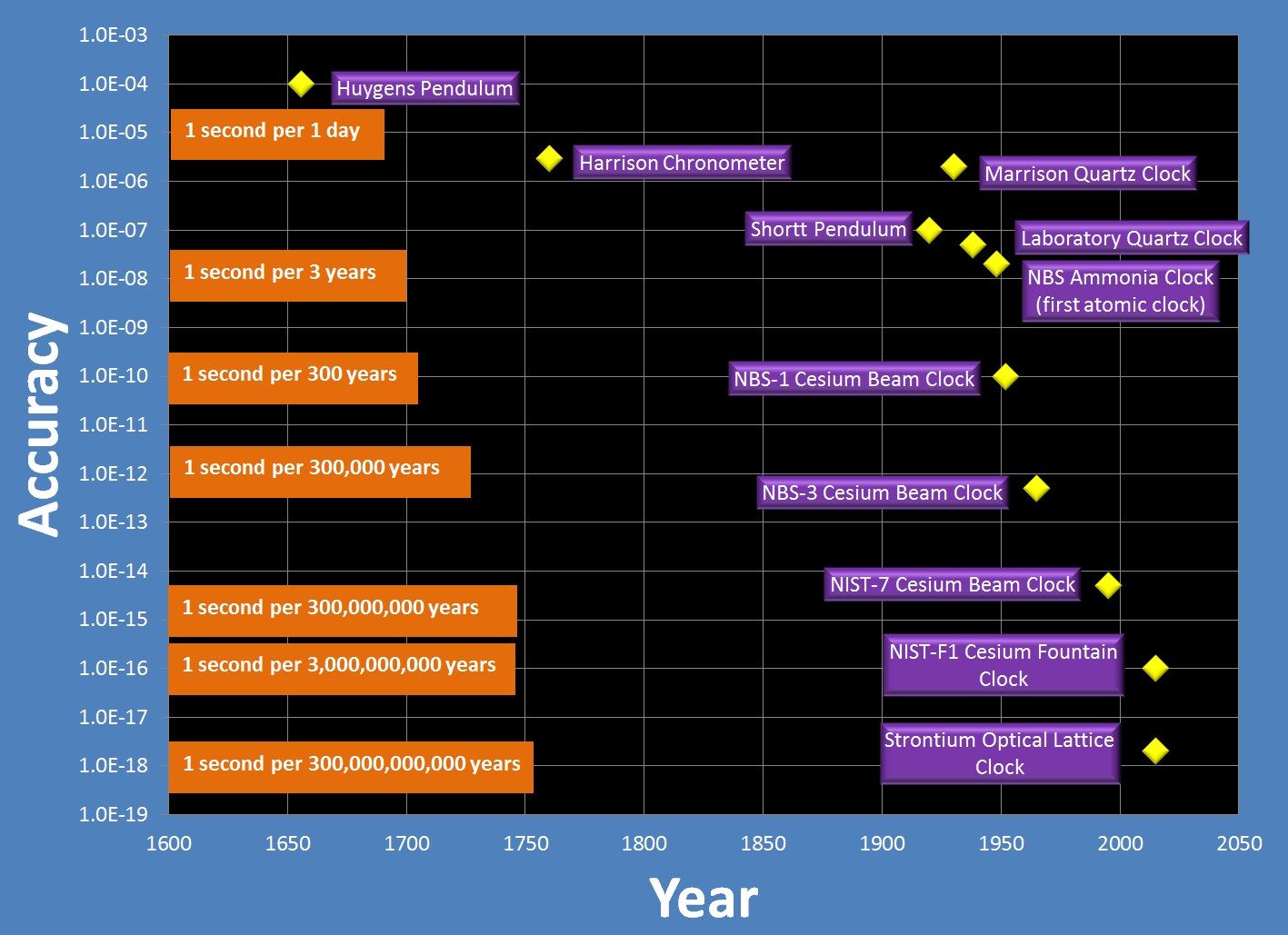
Scientists are racing to build a new kind of clock that could be even more precise than today's best atomic clocks.
A team in Vienna has built the world's first self-stabilizing nuclear clock, ScienceDaily reported. Unlike earlier prototypes, it does not need a regular atomic clock to keep it steady. It ran on its own for more than 24 hours.
Atomic clocks keep time using electrons in atoms. Nuclear clocks use the tiny nucleus at the center of the atom instead. Nuclei are far less affected by outside disturbances, such as electric and magnetic fields. That could make nuclear clocks extremely stable.
The key is thorium. Most atomic nuclei need huge amounts of energy to change state. But thorium-229 has two energy states that are very close together, so a laser can flip it between them. That flip can be used like the tick of a clock.
In April 2024, researchers led by Prof. Thorsten Schumm at TU Wien, working with Germany's PTB, found that transition in experiments.
China is in the race too. Researchers at Tsinghua University found their experimental nuclear clock ran about six times more steadily than the Vienna system in early tests, Interesting Engineering reported. Both teams trap thorium-229 nuclei inside crystals.
Ultra-precise clocks are used in GPS, telecommunications and science. Nuclear clocks could also help physicists test basic laws of nature, such as whether natural constants change over time.
Atomic clocks are improving as well. A lutetium clock in Singapore recently set a record for accuracy, SciTechDaily reported.
What we know: teams in Vienna and China have built working thorium-229 nuclear clocks.
What we don't: how soon nuclear clocks could be used outside the lab.
Where outlets agree ScienceDaily and Interesting Engineering both report working nuclear clocks built around thorium-229 nuclei.
Where they differ The outlets cited here report the same key facts so far.