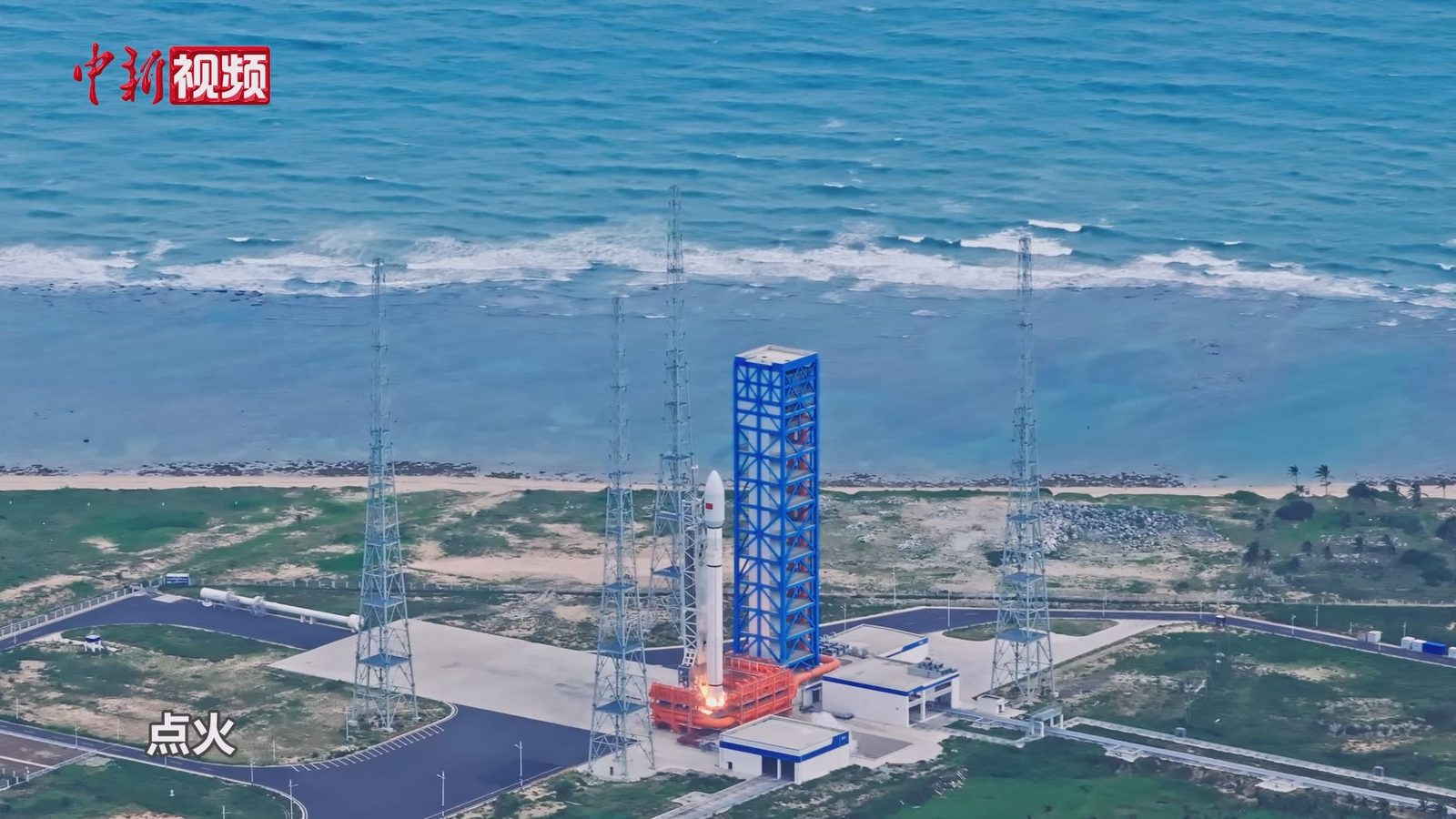
China adds nine satellites to its giant space internet network
China launched a Long March 12 rocket early Saturday from Hainan island with a new batch of internet satellites. Trackers say it carried nine. China plans about 13,000 such satellites in all, a network built to compete with SpaceX's Starlink internet service.
China sent another batch of internet satellites into orbit early Saturday, Beijing time. A Long March 12 rocket lifted off at 3:27 a.m. from a commercial launch site at Wenchang, on the southern island of Hainan. That was Friday afternoon on the U.S. East Coast.
China's state news agency Xinhua said the rocket placed the 27th group of low-orbit internet satellites into the planned orbit. Launch trackers, including Space Launch Live, said the batch held nine satellites for the state-owned network often called Guowang, or SatNet.
The network is China's answer to SpaceX's Starlink. It is planned to grow to about 13,000 satellites. Space writer Robert Zimmerman, who keeps a running tally on his site Behind the Black, estimates about 220 Guowang satellites are now in orbit, though he said earlier reports suggest the number could be closer to 204. He wrote that China's goal is about 310 this year, then 900 in 2027.
The pace is quick. This was at least the third SatNet launch since mid-September, after flights on Sept. 17 and Sept. 23, according to Space Launch Live.
The Long March 12 is a newer medium-size rocket that burns kerosene and liquid oxygen. It can carry at least 10 tons to low orbit.
Why it matters: large satellite networks can bring fast internet to remote places, ships and planes. They also crowd low orbit, which raises the risk of collisions and space junk, and they compete for the same radio space.
By Zimmerman's count, SpaceX has made 114 successful launches this year, matching the rest of the world combined, with China next at 61.
What we know: A Long March 12 put a new group of Chinese internet satellites into orbit on Saturday.
What we don't: The exact size of the network so far, since China does not publish a running total.
Where outlets agree Xinhua and Behind the Black both report that a Long March 12 from Wenchang put a new batch of Chinese internet satellites into orbit.
Where they differ Xinhua names the payload as the 27th group of low-orbit internet satellites, while Behind the Black says state media did not confirm the payload and counts the network at about 220 satellites.