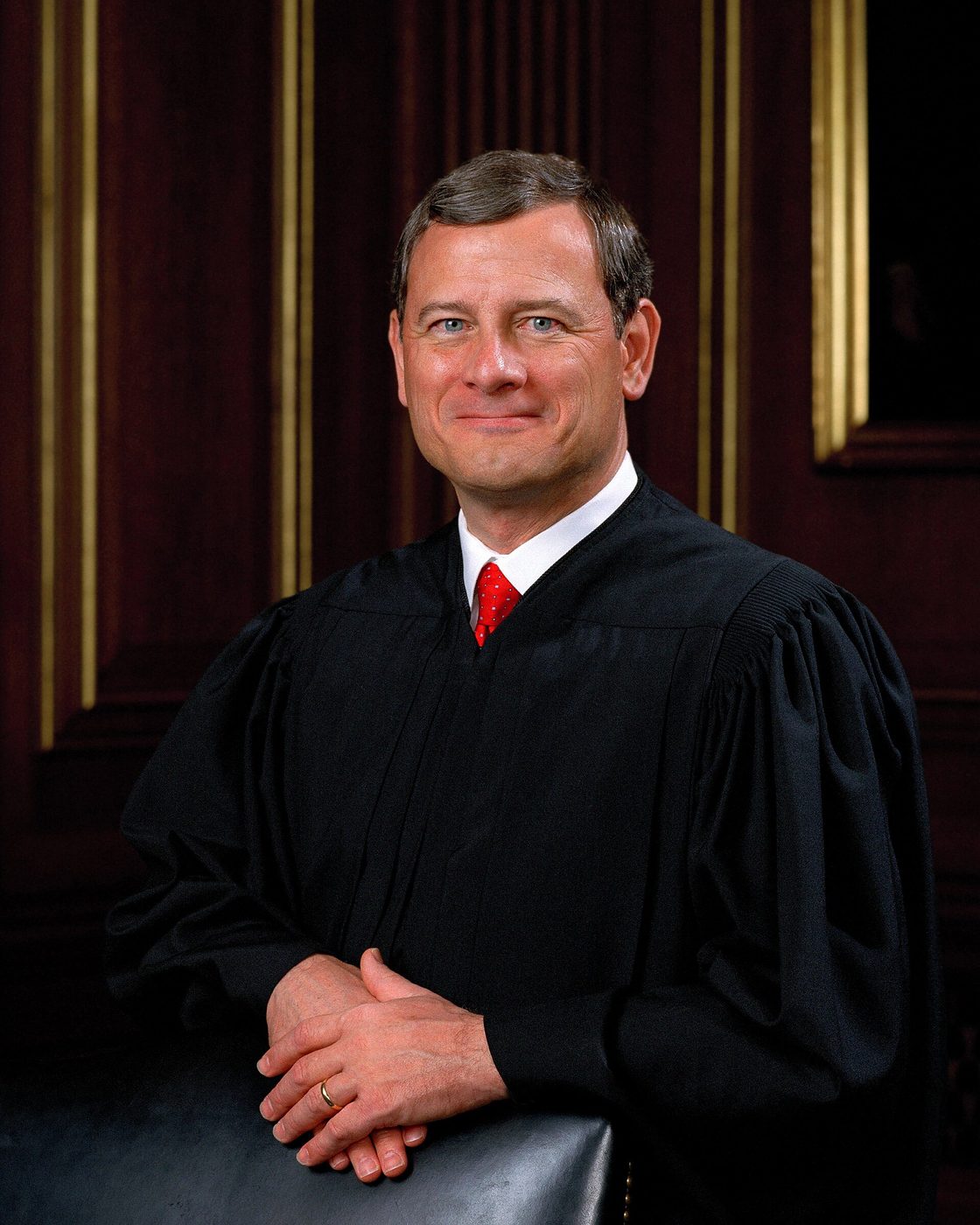
Roberts pauses court deadline in fight over cheap TV ad rates
Chief Justice John Roberts on Thursday paused an appeals court order that gave the FCC until Friday to rule on a challenge to cheaper TV ad rates for party committees. The rule lets Republicans, whose party committees have more cash, buy airtime at candidate prices before the midterms. The Democrats who sued must answer by 5 p.m. Saturday, and the election is Nov. 3.
Chief Justice John Roberts on Thursday paused a lower court order in a fight over who gets cheap TV ad rates before the midterms.
The 4th U.S. Circuit Court of Appeals had given the Federal Communications Commission until Friday to rule on a challenge to its new policy. Roberts put that deadline on hold while the Supreme Court weighs requests from the Trump administration and the Republican House and Senate campaign arms. He told the Democrats who brought the case to respond by 5 p.m. Saturday. He set no date for a ruling.
Federal law says that in the weeks before an election, TV stations must sell ad time to candidates at their lowest rates. In March, the FCC said for the first time that political parties working with candidates, and joint fundraising committees, get those rates too, The New York Times reported.
The money matters. Democratic candidates have tended to raise more than their party's committees, while the reverse is true for Republicans. So the new policy is expected to help the GOP, USA TODAY reported.
Four Democrats sued: Sen. Jon Ossoff of Georgia, former Sen. Sherrod Brown of Ohio, former Gov. Roy Cooper of North Carolina and Rep. Kristen McDonald Rivet of Michigan. Last month the Supreme Court ruled 8-1 that they had to wait for the FCC to act before going to court, the Washington Examiner reported.
The FCC still has not ruled. On Wednesday, a split 4th Circuit panel said the agency was "dragging its feet." The court said it had shown the FCC "a substantial amount of grace, but its gamesmanship must end." Judge J. Harvie Wilkinson III dissented.
Solicitor General D. John Sauer called the order "a flagrant abuse" of the courts' power and "a baseless effort to circumvent" the Supreme Court. The Justice Department said it is reasonable for the FCC to hold off on a decision in the middle of an election season.
For now, party committees can keep buying ads at the lower rates, The Hill reported. The election is Nov. 3.
What we know: The cheaper rates for party committees stay in place while the Supreme Court decides.
What we don't: Whether the full court will act before Election Day.
Where outlets agree The New York Times and the Washington Examiner both report that Roberts paused the 4th Circuit order and told the Democratic challengers to respond by 5 p.m. Saturday.
Where they differ The Washington Examiner reports Chief Justice John Roberts granted the pause as an administrative stay, while USA TODAY reports the justices blocked the order.