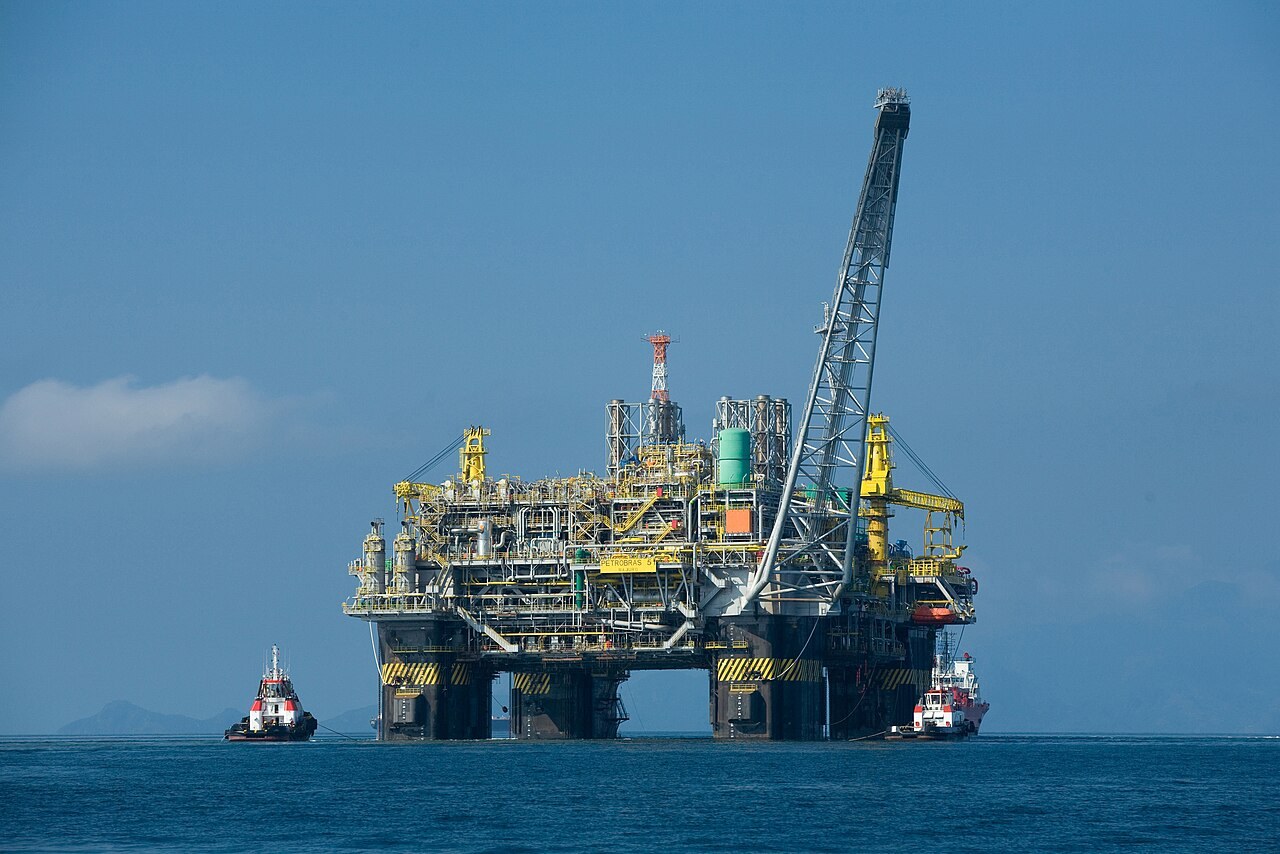
Oil eases after Trump's Iran pledge, but Isaias shuts Gulf output
Oil prices slipped early Friday after President Trump said America will not attack Iran before the November 3 midterm elections, one day after crude jumped 4%. Fuel costs still weigh on drivers and truckers as Hurricane Isaias closes in on the Gulf Coast. About 63% of offshore Gulf oil production, or 1.28 million barrels a day, has been shut down ahead of the storm.
Oil prices fell early Friday after a big jump the day before. Brent crude, the global benchmark, fell about 0.8% to $103.42 a barrel in early trading, while West Texas Intermediate, the American benchmark, slipped about 0.7% to $90.81, The National reported.
The dip followed a post by President Donald Trump. "We will not be attacking Iran at any time prior to the Midterm Elections to be held in the United States on November 3rd," he wrote on Thursday. He said the two countries were holding "productive discussions," and that the U.S. blockade of Iranian shipping would stay in "full force."
The pledge did little to cool Thursday's trading, NBC News reported. Brent closed at $104.28, up 4%, after nearly reaching $106 earlier in the day, and American crude ended up 3.6% at $91.49. Benchmark diesel futures spiked 6% in European trading.
Several forces drove Thursday's jump. A tanker was attacked off Qatar, Houthi rebels struck Saudi airports, and there were reports of possible new American strikes on Iran, an energy analyst at DNB Carnegie told Dow Jones.
Another force sits in the Gulf of Mexico. Hurricane Isaias is heading for the northern Gulf Coast, and producers such as Chevron, Shell and Harbour Energy have pulled workers off platforms. As of noon Thursday, 121 platforms and five rigs had been evacuated, shutting in 1.28 million barrels of oil a day, which equals 63% of the region's offshore oil output and 57% of its offshore natural gas, Dow Jones reported.
In its 4 a.m. CDT advisory Friday, the National Hurricane Center expected Isaias to make landfall Friday night or early Saturday between Ocean Springs, Mississippi, and the Florida Panhandle, with maximum winds near 110 mph.
The stakes reach the gas pump. The national average for regular gas was $4.36 a gallon on Thursday, more than 45% higher than when the war with Iran began on February 28, NBC News reported, while diesel cost $6.28 a gallon.
Even after Friday's dip, Brent is still on track for a weekly gain, while American crude is set for a small weekly loss.
What we know: Trump ruled out strikes on Iran before November 3, and Isaias has shut most Gulf oil output.
What we don't: How long Gulf platforms stay shut after the storm passes.
Where outlets agree NBC News and Dow Jones both report that Brent crude settled Thursday at $104.28 a barrel, while U.S. crude closed at $91.49.
Where they differ NBC News reports Brent settled Thursday at $104.28 a barrel, while The National, quoting Emirates NBD's Nick Stadtmiller, puts the close at $104.20.