Study: 294,000 in Nepal's Himalayas live in flood danger zones
A new study estimates about 294,000 people live in areas of extreme flood risk below Nepal's Himalayan peaks, where climate change is destabilizing rock and ice. It follows August floods that killed at least 1,455 people and left 5,285 missing. The World Bank estimates physical damage from that disaster at $1.66 billion.
Six weeks after a deadly wall of water tore through central Nepal, scientists say hundreds of thousands more people live in its path.
A study published Thursday in the journal Scientific Reports counts about 294,000 people living in high-risk flood zones below Nepal's mountain basins, NBC News reported. About 108,000 of them live downstream of glacial lakes. Some of those lakes are held back by ice that could fail and release water all at once.
Climate change is weakening the rock and ice on Himalayan slopes, and meltwater is filling more glacial lakes, NBC reported. "There's a lot of development going on very close to the river channel in these potentially hazardous zones," said Scott Watson of the University of Leeds, who studies glacial lakes. He called the recent disaster "a bit of a wake-up call" for early warning systems and limits on where people build.
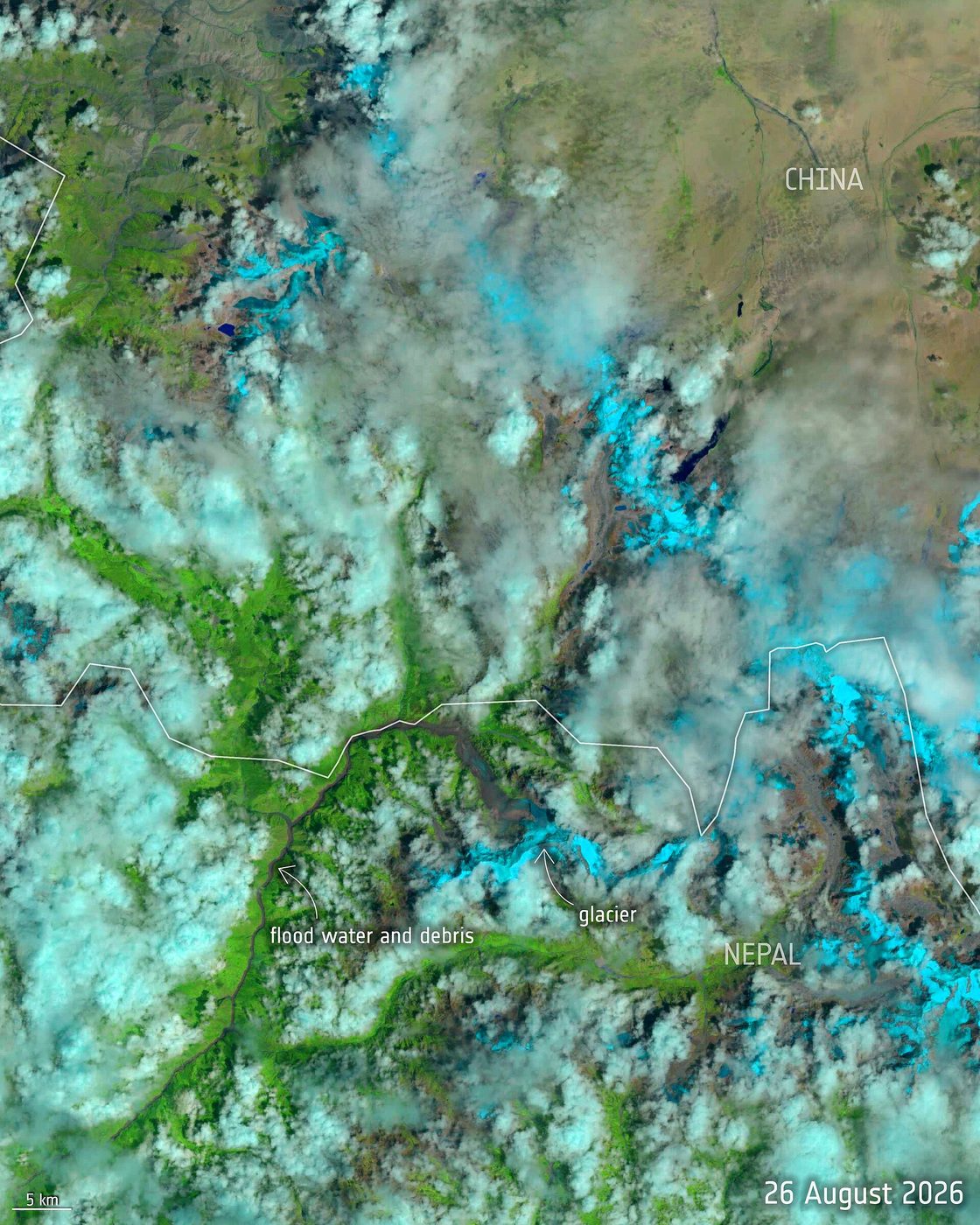
The Aug. 26 disaster began when a huge rock and ice avalanche fell from a peak called Langtang Lirung. The debris flow traveled about 120 miles. At least 1,455 people died and 5,285 are still missing, according to Nepali authorities.
Nepal ended its search for victims this week, The Associated Press reported. Some families were angry, while others said they wanted closure. Many cannot get death certificates, which they need for insurance and inheritance. Nepal's government has proposed cutting the wait to declare a missing person dead from 12 years to 45 days, Malay Mail reported.
The cost is steep. The World Bank estimates $1.66 billion in damage to roads, bridges, homes and power plants, DT Next reported. Twelve hydropower projects were hit. The bank said Nepal may need to "build differently" in the mountains, not just rebuild.
The researchers call their map a first step. They plan detailed flood maps for the most exposed hot spots.
What we know: Nearly 300,000 people live in high-risk flood zones below Nepal's peaks.
What we don't: How quickly Nepal will add warning systems and building limits.
Where outlets agree NBC News, DT Next and the Associated Press all report that at least 1,455 people died and 5,285 remain missing after the Aug. 26 floods.
Where they differ The outlets cited here report the same key facts so far.