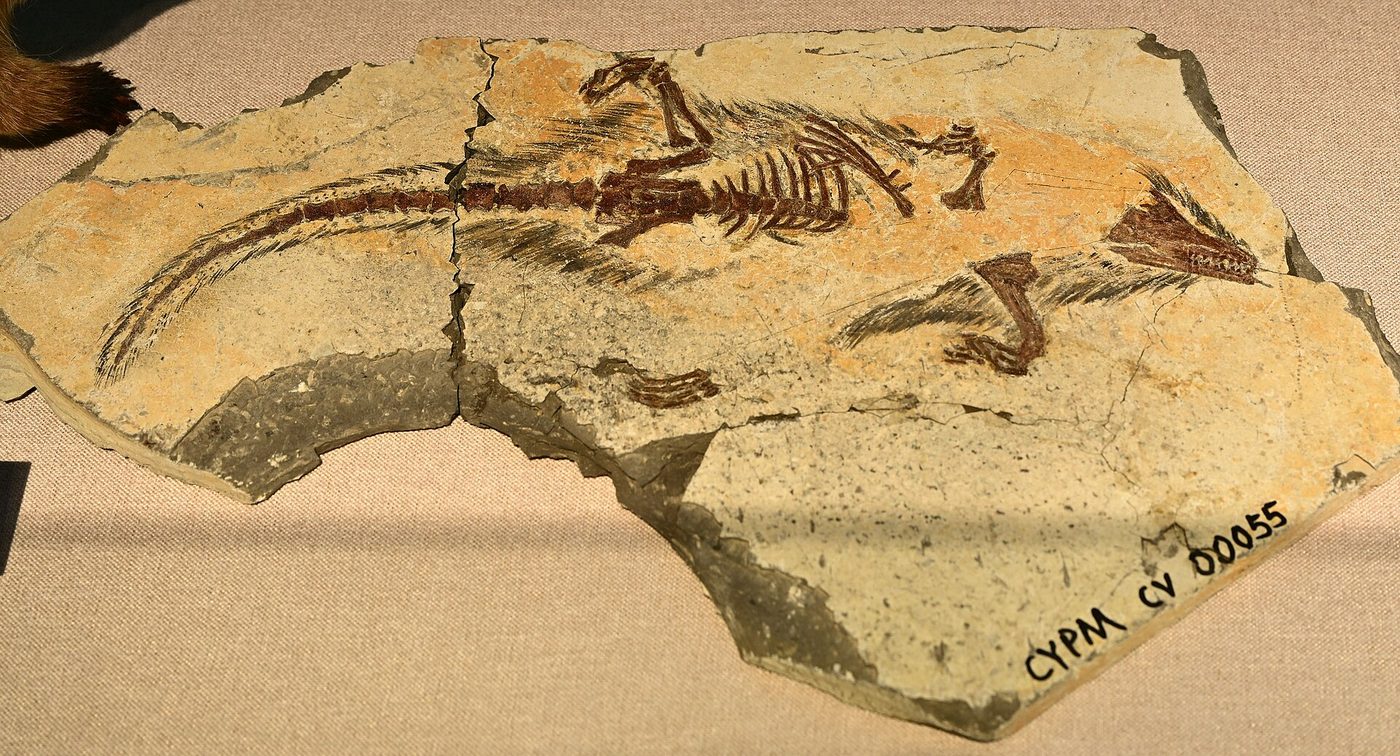
Jurassic 'otter' fossil shows early mammal relatives could chew and swallow
A 165-million-year-old fossil from China shows an early mammal relative could chew food and swallow it one bite at a time, as mammals do today. Scientists named it Megacauda sungei, or 'big tail.' The find, published in Nature, pushes those traits back to at least the middle Jurassic.
Chewing your food and swallowing it, one bite at a time, is something every mammal does. A new fossil shows that skill is very old.
Scientists described a 165-million-year-old animal from the Inner Mongolia region of China in the journal Nature. They named it Megacauda sungei, which means "big tail." It was a mammaliaform, a close relative of true mammals, from a lost group called docodonts.
The fossil is so well kept that it shows tiny bones in the throat, called hyoid bones, NPR reported. In modern mammals, these U-shaped bones link the mouth and throat to the esophagus and voice box. They let mammals swallow chewed food in small lumps instead of gulping whole prey, like an alligator does. The same bones let babies suckle milk.
"This is an incredibly important evolutionary innovation," said Zhe-Xi Luo, a paleontologist at the University of Chicago and senior author of the study. "Once early mammals had this apparatus, each group could develop specialized teeth and diversify into a tremendous range of food resources."
The animal was 40 to 50 centimeters long, or about 16 to 20 inches, and weighed 1 to 2 kilograms. That is about the size of a chihuahua, NPR said. Its back half looked like a platypus, with similar hind legs and a broad, flat tail like a river otter's. "The big tail is good for swimming," Luo said. The team thinks it lived partly in water and hunted there.
The fossil's bones are black and hard to see against the dark rock. Co-author Chang-Fu Zhou of Shandong University of Science and Technology had it scanned with CT and X-ray methods during the COVID-19 pandemic. One technique made the skeleton glow bright yellow in images.
The throat muscles would have worked like those of a modern opossum, said co-author Peishu Li, now at Ohio University.
In 2019, Luo's team described a tiny docodont from about the same age, Microdocodon gracilis, which also had mammal-like throat bones. Megacauda is much bigger and better preserved.
What we know: Mammal-style chewing and swallowing go back at least 165 million years.
What we don't: Exactly when these throat bones first appeared.
Where outlets agree NPR and the University of Chicago both report that Megacauda sungei lived about 165 million years ago and had throat bones that let it chew, swallow and suckle like modern mammals.
Where they differ The team links the throat bones to the spread of mammal diets, but how early the trait first evolved is still unknown.