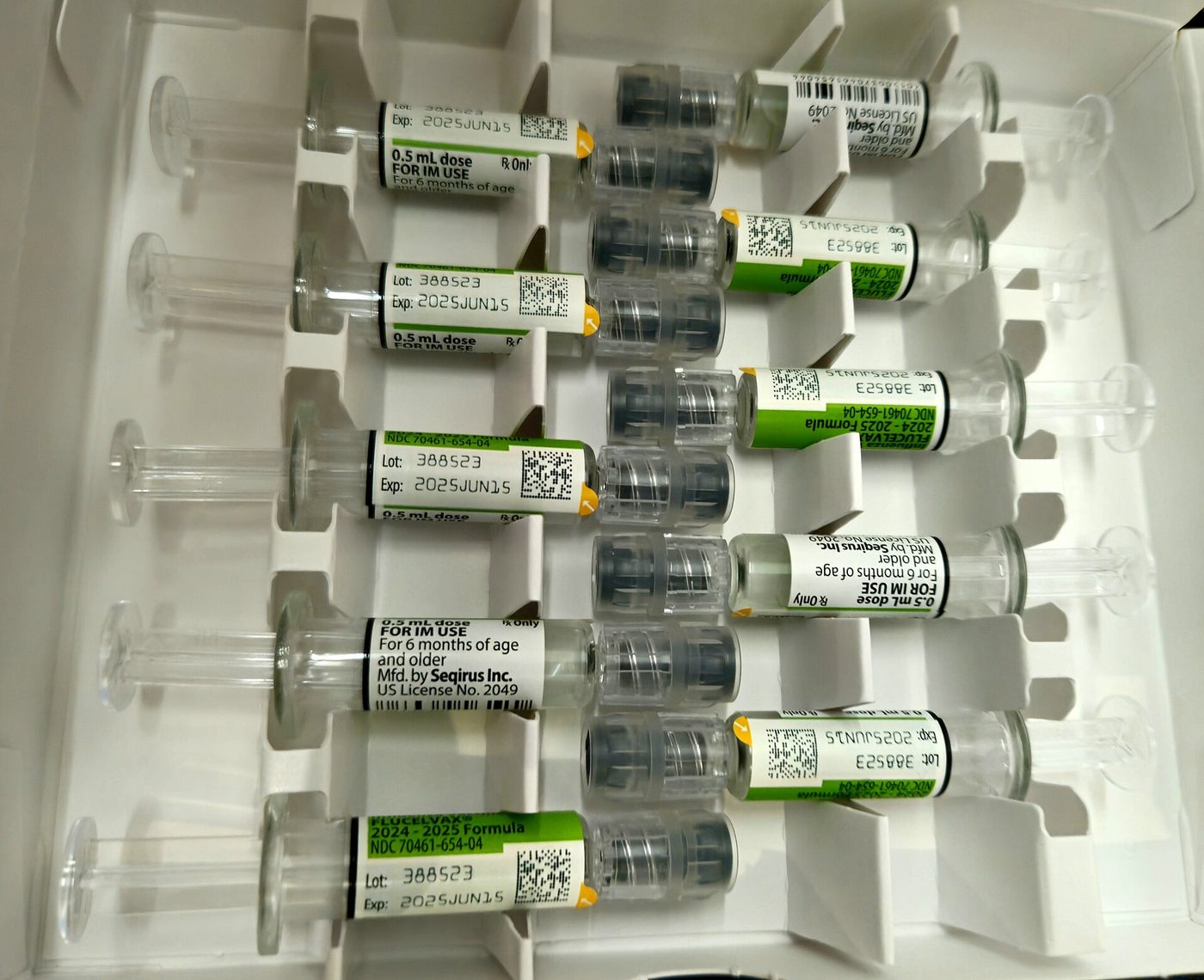
Flu is already spreading, and doctors say get a shot now
Flu cases are inching up across the country, and San Francisco has already reported a flu death. Doctors' groups say October is the time to get vaccinated, since protection takes about two weeks. With the CDC's vaccine panel tied up in court, medical societies have issued their own advice.
Flu season is getting an early start, and health experts say now is the time to get a shot.
Flu cases are inching up across the United States, including on the West Coast, where San Francisco has reported its first flu death of the season, WCCO Radio reported. Minnesota health officials say they are also starting to see flu activity.
"You want to get vaccinated before Halloween," said Dr. Darien Sutton, an ABC News medical contributor. "It takes about two weeks for the flu vaccine to take effect."
Almost everyone 6 months and older should get a flu shot, medical groups agree. Flu is especially dangerous for people 65 and older, pregnant women, young children and people with health problems such as asthma, diabetes, heart disease or weak immune systems. The last two flu seasons saw unusually high numbers of child deaths, mostly in unvaccinated kids, AP reported.
Every year, flu causes hundreds of thousands of hospital stays in the U.S. and kills tens of thousands of people. Vaccines do not stop every infection, but they lower the risk of the worst outcomes. Last year, flu shots cut hospital stays among older adults by 31%, according to the Vaccine Integrity Project at the University of Minnesota.
This year, the usual federal advice is missing. The CDC's vaccine advisory panel is caught in a court fight, and the CDC has not updated its flu guidance, AP reported. Groups including the American Academy of Pediatrics, the American Academy of Family Physicians, the American College of Obstetricians and Gynecologists and the Infectious Diseases Society of America have posted their own guidelines.
There are new options. The FDA approved Moderna's mFlusiva, the first mRNA flu vaccine, for people 50 and older. One study found it was 27% more effective than a standard shot among people ages 50 to 64. Seniors can choose one of three "enhanced" vaccines made for older adults. A nasal spray, FluMist, is an option for some people ages 2 to 49.
You can get a COVID-19 shot at the same visit. Side effects for both are usually mild, such as a sore arm, tiredness or a headache.
Anyone who gets sick should stay home to avoid spreading it, Minnesota officials said.
What we know: Flu is already circulating, and shots take about two weeks to work.
What we don't: How severe this season's main strain will be.
Where outlets agree AP and WCCO Radio both report the CDC has not updated its flu advice because its vaccine panel is caught in a court battle, so doctors' groups have stepped in.
Where they differ Health officials say it is too early to know how severe this season's circulating strain will be, even as cases rise early.