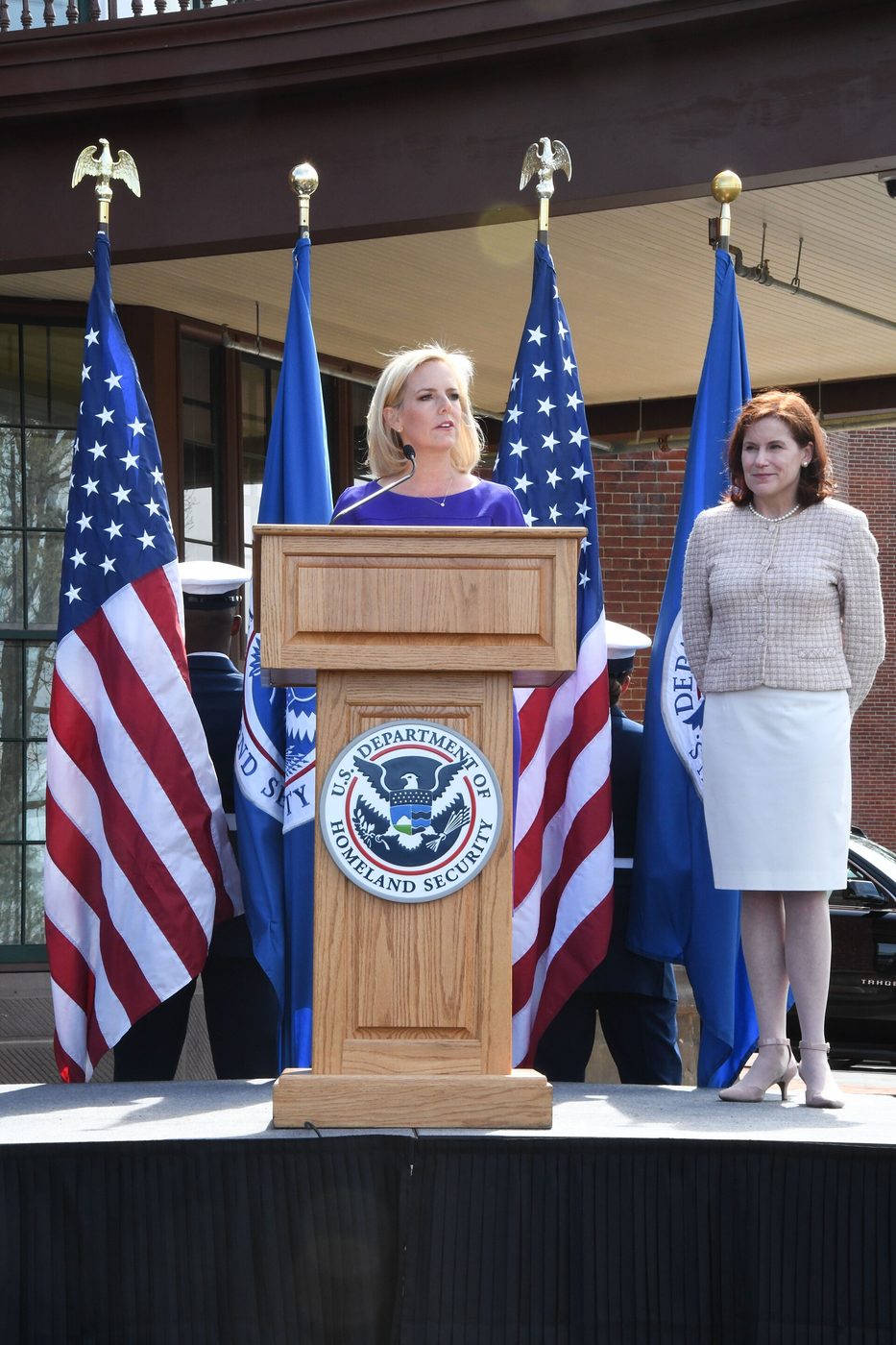
DHS proposes $70,000 fee for foreign students' work program
The Homeland Security Department wants schools to pay $70,000 for each international student who joins a popular work program after graduation. Renewals would cost $30,000. DHS says it wants to curb fraud and protect U.S. workers, while college groups warn it will drive students away.
The Department of Homeland Security on Wednesday proposed steep new fees for a program that lets international students work in the United States.
The program is called Optional Practical Training, or OPT. It lets students on F-1 visas work in jobs tied to their major during or after school. Most can work for up to 12 months at each degree level. Science, tech, engineering and math graduates can get 24 more months.
Under the plan, schools would pay $70,000 for each student's first OPT period and $30,000 for each later one. Schools would have to pay before recommending a student. Immigration officials would not grant work permission if the fee is unpaid. The money would go to the U.S. Treasury. Today, OPT costs students around $500, Fox News reported.
DHS says the fees target fraud, including "pay-to-stay" visa schemes. "Optional Practical Training was never meant to be a back door into the American workforce, a subsidy for cheap labor, or a prize for those who game the system," a DHS spokesperson said.
The rule is not final. The public has 60 days to comment, and legal challenges could delay it, AP reported.
College groups pushed back. Fanta Aw, CEO of NAFSA, which represents international educators, said driving away students "will only hurt American innovation, economic growth, workforce development, and global leadership." Sarah Spreitzer of the American Council on Education said OPT is a key reason students choose U.S. schools.
Doug Rand, a former immigration adviser in the Biden administration, predicted courts would strike the fee down, as they did a $100,000 fee on H-1B work visas. "DHS has no authority to slap a $70k fee on international students," he wrote.
The plan is part of a wider push by the Trump administration on immigration and higher education. Last fall, the number of new international students fell by 17%, the sharpest drop since the COVID-19 pandemic, AP reported. Some colleges report drops of 30% to 40% this fall.
What we know: The proposal sets a $70,000 first fee and $30,000 renewals, paid by schools.
What we don't: Whether it survives the comment period and likely court fights.
Where outlets agree AP and Fox News both report the plan would charge $70,000 for a student's first OPT period and $30,000 for each later one.
Where they differ DHS says the fees will curb fraud and protect U.S. workers, while college groups and a former Biden-era official say they will drive away talent and likely lose in court.