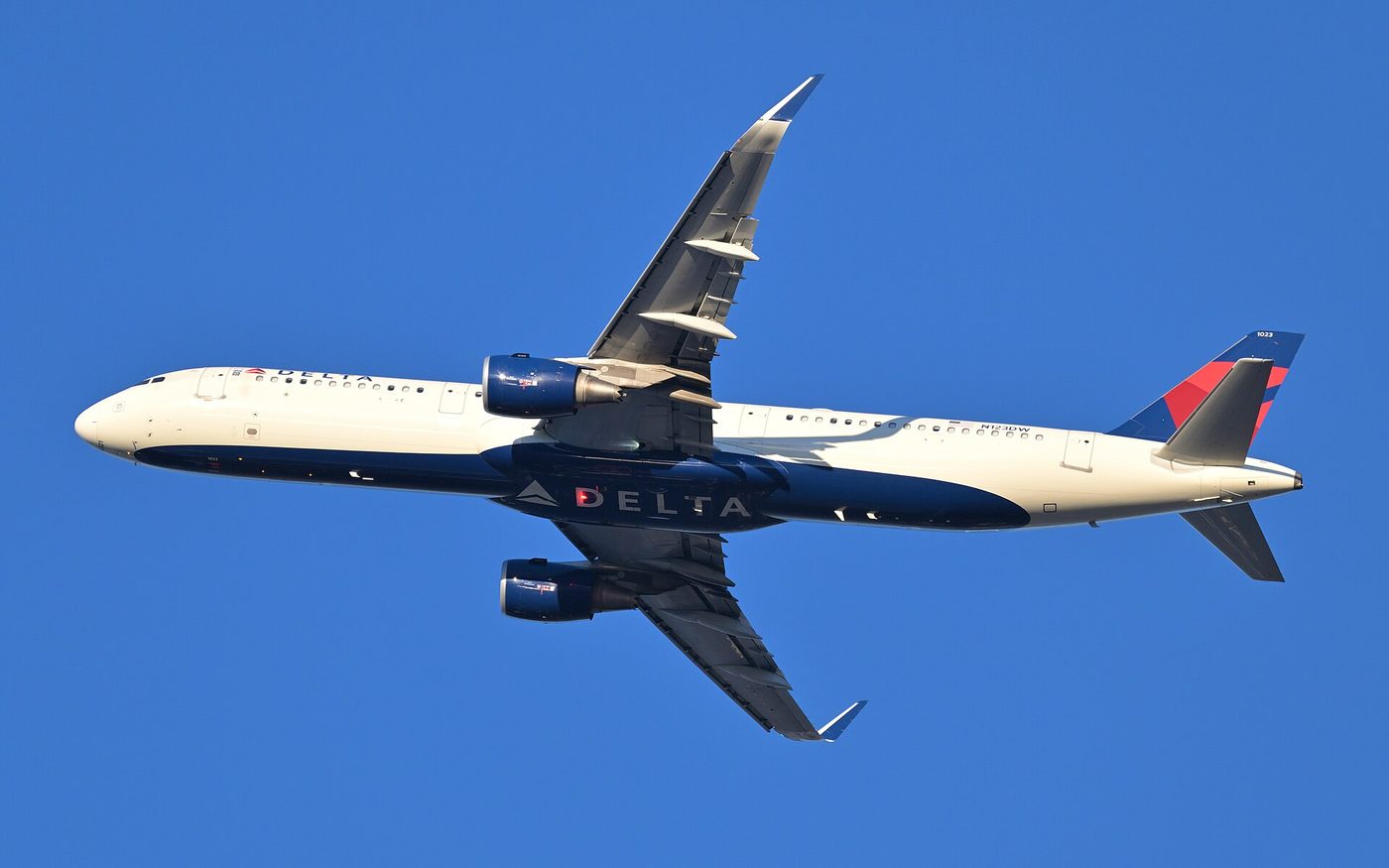
Delta reports Friday after jet fuel ran far above its plan
Delta Air Lines reports third-quarter results before the market opens Friday, the first big U.S. airline to do so. Its results will show who paid for this summer's fuel spike, travelers or the airline. Delta planned on about $3.15 a gallon, but Gulf Coast jet fuel averaged about $3.82 over the quarter.
Delta Air Lines reports results for July through September before the stock market opens on Friday, Oct. 9. It will discuss them in a webcast at 10 a.m. ET on its investor site, Kalkine reported. Delta usually reports first among big U.S. airlines, so its numbers set the tone for the group.
Fuel is the big question. In July, Delta told investors it expected to pay about $3.15 a gallon for jet fuel, including a small boost from its own refinery. Then oil jumped as tensions in the Strait of Hormuz flared. Gulf Coast jet fuel averaged about $3.82 a gallon over the quarter and $4.37 in September, Pip Theory reported, citing federal data.
That gap is costly. Delta burns roughly 1.1 billion gallons a quarter. So every 10 cents a gallon adds about $110 million to $115 million in costs, Pip Theory estimated.
Delta's July outlook called for adjusted earnings of $2.00 to $2.50 a share and a profit margin of 11% to 13%. Analysts now expect less. Pip Theory cites a consensus near $1.88 a share, down from $2.11 a month ago. Kalkine cites about $1.83. A year ago, Delta earned $1.71.
Two things could soften the blow. One is fares. Airlines raise ticket prices when fuel spikes, but many seats are sold in advance, so the effect lags. The other is Delta's refinery in Trainer, Pennsylvania. It earns more when jet fuel rises faster than crude oil, which happened this summer.
Delta has handled high fuel before. In the spring quarter, its adjusted fuel bill hit $4.4 billion. Chief Executive Ed Bastian called it "the highest quarterly fuel expense in our history." Delta still made $1.56 a share and record revenue of $17.7 billion.
Delta also stood by its full-year forecast of $6.50 to $7.50 a share in July. Friday's update will show whether that holds. U.S. crude fell to about $87 a barrel on Tuesday, though Hormuz tensions lifted prices again early Wednesday, Kalkine reported.
What we know: Delta reports Friday morning, with fuel far above its plan.
What we don't: How much of the cost Delta passed on to travelers through fares.
Where outlets agree Kalkine and Pip Theory both report Delta guided $2.00 to $2.50 a share on fuel near $3.15 a gallon, and that analysts now expect less.
Where they differ Published estimates differ, with Pip Theory citing about $1.88 a share and Kalkine about $1.83.