Astronomers find fully 'heavy' methanol in space for the first time
An ALMA telescope survey of young stars has found methanol made entirely with heavy hydrogen, a first in space. There is about 100 times more of it than chemistry models predict. The finding helps show how ingredients for planets, and maybe life, form around newborn stars.
Astronomers have spotted a rare form of alcohol in space for the first time. It is methanol, the simplest alcohol, with every hydrogen atom swapped for deuterium, a heavier form of hydrogen.
The molecule, called fully deuterated methanol, was found around a young star named IRAS4A2, the Max Planck Institute for Radio Astronomy said. The star sits about 1,000 light-years away in the Perseus molecular cloud. Arnaud Belloche of the institute led the study, published in Astronomy & Astrophysics.
There is far more of the molecule than expected. Its amount is about 100 times higher than chemistry models predict, the institute said. "A key process driving the formation of multiply deuterated methanol therefore seems to be missing" from every model, Belloche said. It is also the first time any molecule with four heavy hydrogen atoms has been found in space.
Why it matters: Methanol is a key building block. On icy dust grains, it can slowly combine with carbon, oxygen and hydrogen to make bigger organic molecules. Molecules with heavy hydrogen form only in extremely cold places, like the earliest stages of star birth. So they act like a fingerprint of how a star's chemistry began.
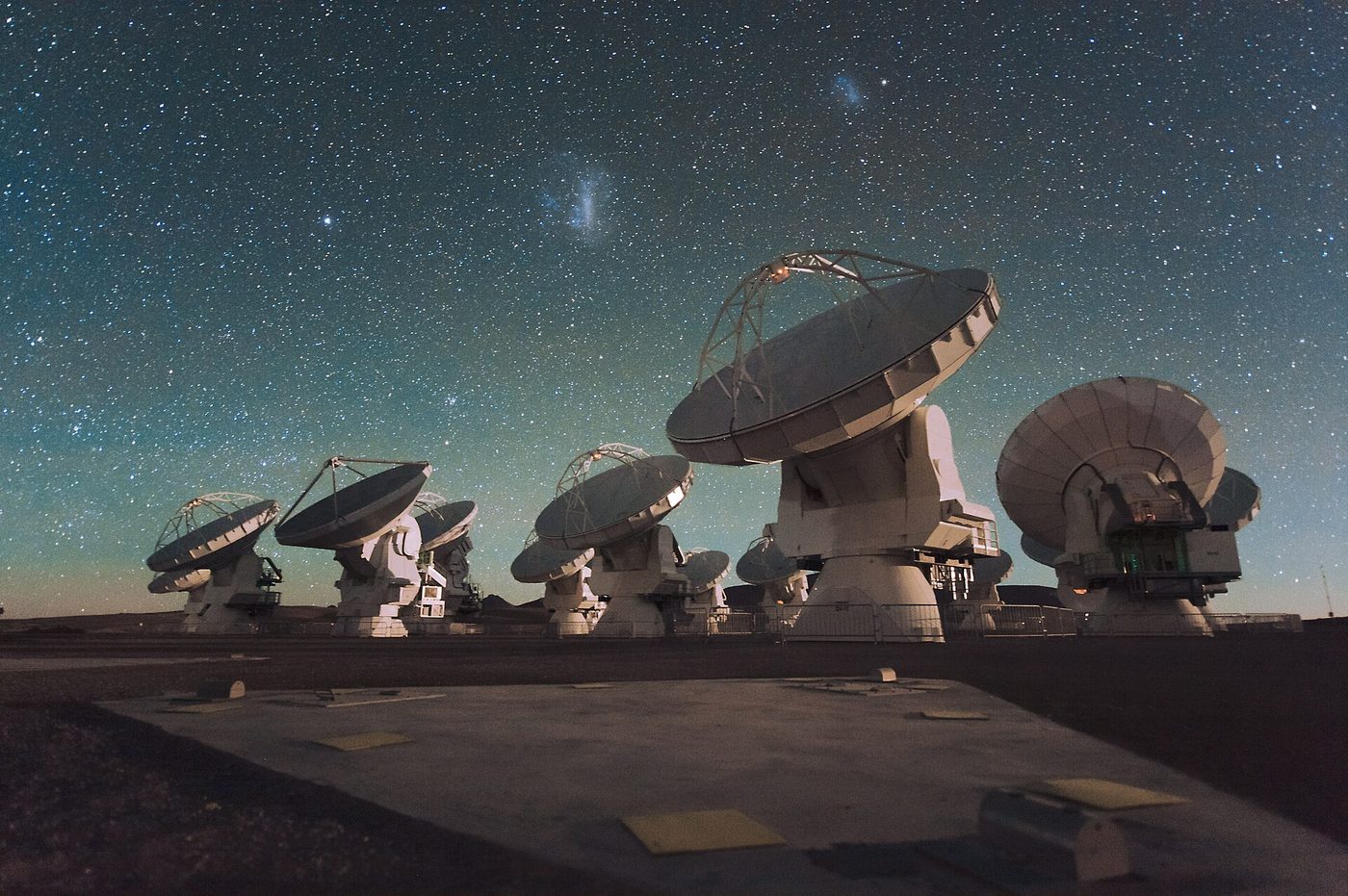
The find comes from a big survey called COMPASS, short for Complex Organic Molecules in Protostars with ALMA Spectral Surveys. It used the Atacama Large Millimeter/submillimeter Array, a set of radio dishes in Chile's Atacama Desert. The project spent more than 100 hours studying 11 nearby young stars like the Sun. The first results appear in seven papers.
The survey also found methanol "beacons," called masers, around young stars, the ALMA Observatory said.
"We are getting completely new insights into the complex chemistry occurring around the youngest protostars," said Jes Jørgensen of the University of Copenhagen, who leads the program. "The interesting question is how these chemical ingredients may influence the conditions on planets and potentially the origin of life there."
The team includes scientists from the U.S., France, Switzerland and South Korea.
What we know: Fully heavy methanol exists around at least one young star, in surprising amounts.
What we don't: How it forms, since current models fall short.
Where outlets agree The Max Planck Society and the ALMA Observatory both report the first detection in space of fully deuterated methanol, from the COMPASS survey.
Where they differ The molecule's amount is about 100 times what chemistry models predict, so scientists don't yet know how it forms.