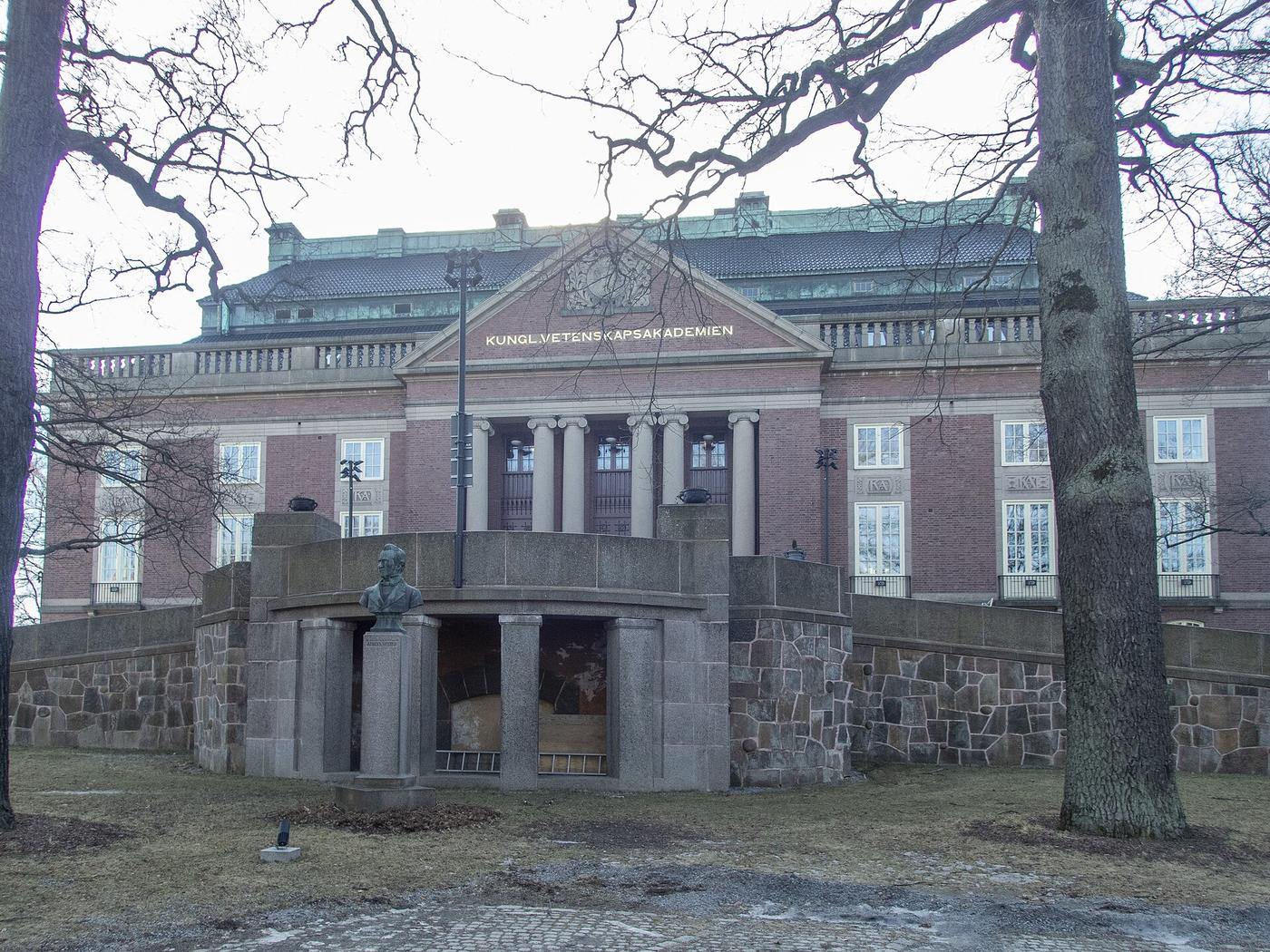
Chemistry Nobel goes to Kagan and Soai for life's mirror-image puzzle
Henri B. Kagan of France and Kenso Soai of Japan won the 2026 Nobel Prize in Chemistry on Wednesday. They found ways to make a chemical reaction turn out mostly one of two mirror-image forms of a molecule. That helps explain why life uses only one form, and it guides how chemists make medicines.
Two chemists who helped explain one of life's oldest puzzles won the 2026 Nobel Prize in Chemistry on Wednesday. The Royal Swedish Academy of Sciences named Henri B. Kagan, of the former Université Paris-Sud in France, and Kenso Soai, of the Tokyo University of Science in Japan. The prize honors them "for the discovery of non-linear effects and autocatalysis in asymmetric organic synthesis."
The puzzle is about mirror images. Many molecules come in two forms that match like a left hand and a right hand. Amino acids, the building blocks of proteins, are one example. Living things use only one hand. But when chemists ran these reactions in the lab, they usually got an even mix of both, the academy said.
Kagan took the first big step in 1986. He found a way to steer reactions so they made far more of one hand than anyone thought possible. Soai went further. In 1995 he described a reaction that could, in theory, make only one form, and in 2003 he showed it working. "Other than life itself, no one had previously achieved this feat," the academy said.
"Henri Kagan and Kenso Soai have provided a solution to a chemical mystery that is over a century old," said Heiner Linke, who chairs the chemistry committee.
Why it matters: The hand can make a big difference in medicine. One form of a drug may treat a disease while its mirror twin does nothing or causes harm. The BBC pointed to thalidomide in the 1950s. One form eased morning sickness, the other was toxic, and thousands of babies were born with severe disabilities. The academy said the pair's work has been key for chemists who design reactions to make medicines.
Soai called it "one of the most exciting days of my life" when he spoke by phone to the press conference, the BBC reported. Kagan was born in 1930 near Paris, and Soai was born in 1950 in Hiroshima, according to the academy. The two will share 12 million Swedish kronor, about $1.2 million, NPR reported.
The Nobel week goes on. Literature is announced Thursday at 7 a.m. ET, and the Peace Prize follows Friday at 5 a.m. ET. Economics closes the run on Monday, Oct. 12. Winners get their medals on Dec. 10.
What we know: Kagan and Soai share the chemistry prize for work on mirror-image molecules.
What we don't: Whether Kagan, 95, will travel to Stockholm for the Dec. 10 ceremony.
Where outlets agree The academy, the BBC and NPR all say Kagan and Soai won for discovering non-linear effects and autocatalysis in asymmetric organic synthesis.
Where they differ NPR gives Soai's age as 95, but the academy lists his birth year as 1950, and the 1930 birth year belongs to Kagan.