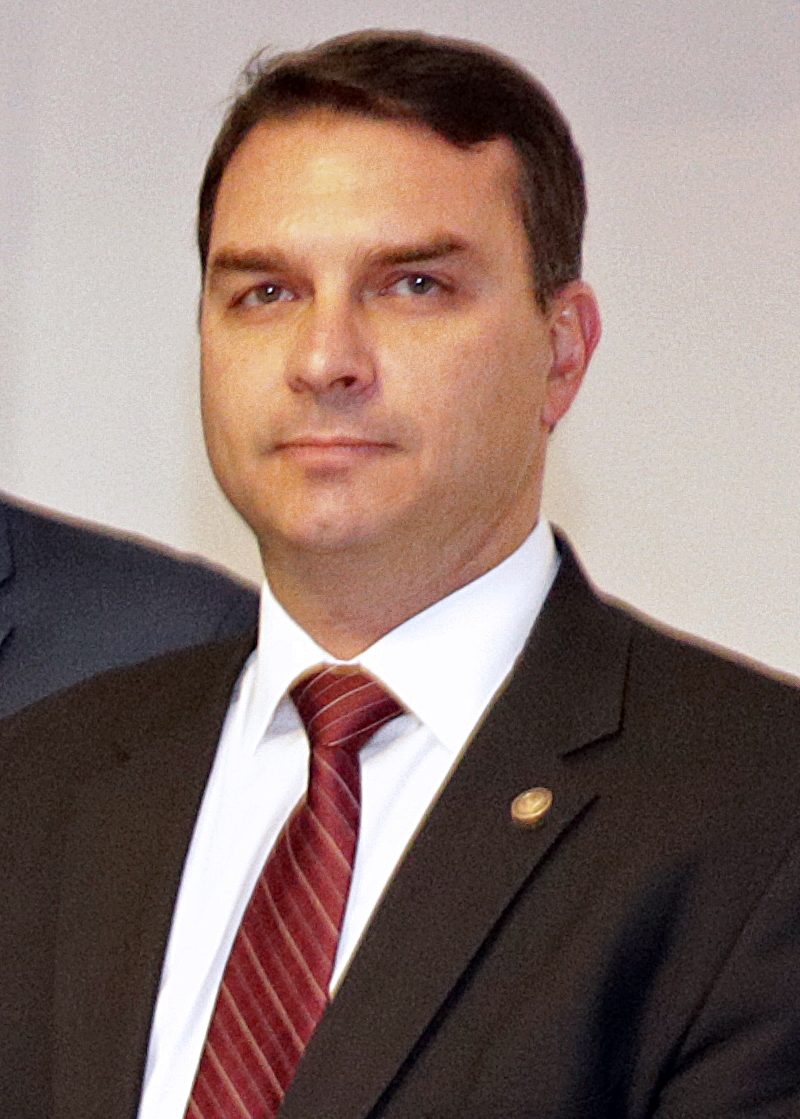
Lula retools his campaign as Flávio Bolsonaro chases runoff votes
Brazil's two presidential finalists began a three-week sprint to the Oct. 25 runoff on Monday. Lula, 80, is reworking his campaign after trailing in the first round. Flávio Bolsonaro won about 47% of valid votes to Lula's 45%, a gap of about 2.25 million votes.
Brazil's presidential race is now a two-man contest. President Luiz Inácio Lula da Silva and Sen. Flávio Bolsonaro began campaigning Monday for an Oct. 25 runoff, a day after Bolsonaro finished first.
With nearly all ballots counted, Bolsonaro had 47.04% of valid votes, about 56.1 million, according to the Brazilian Senate's news agency. Lula had 45.15%, about 53.8 million. Turnout was just under 79%.
Lula's team is shaking things up. Edinho Silva, who chairs Lula's Workers' Party, said the president would meet campaign managers in Brasília to sharpen his message, study turnout by region and move money to swing states, the Associated Press reported. Both men skipped TV debates in the first round. Silva said debates will now be key. "Now it is mano a mano," he said.
Bolsonaro, 45, is reaching out to party leaders and regional allies. His Liberal Party also had a strong night in Congress. AP said it won more than a third of the Senate. Fox News reported the party was on track for 29 Senate seats, against nine for Lula's party.
The map shows the split. Fox News reported Bolsonaro won São Paulo state 52% to 38% and Rio de Janeiro 53% to 39%. Lula ran up big wins in the Northeast, including Bahia, Pernambuco and Ceará. Most polls before the vote had shown Lula ahead.
The leftover votes matter. Writer Augusto Cury placed third with 2.89%. AP reported that three of the other 10 candidates said they will not endorse anyone. Fox News argued most of those voters lean right.
Some background: Flávio is the eldest son of former President Jair Bolsonaro. Jair was barred from running and later convicted by Brazil's Supreme Court over a coup attempt after the 2022 election, which he lost to Lula. Flávio has served as a senator for Rio since 2019. Lula is seeking a fourth term, after serving from 2003 to 2010 and again since 2023.
AP noted that the first-round leader has never gone on to lose a Brazilian presidential election. But the runner-up has never been this close.
What we know: The runoff is Oct. 25, and Bolsonaro leads by about two points after round one.
What we don't: Whether the two will debate, and where the third-place voters will go.
Where outlets agree AP and Fox News both report that Flávio Bolsonaro finished first with about 47% to Lula's roughly 45%, forcing an Oct. 25 runoff.
Where they differ Fox News says Bolsonaro starts the runoff with an edge from right-leaning third-party voters, while AP quotes Lula's camp betting that debates and a broader coalition can still flip the race.