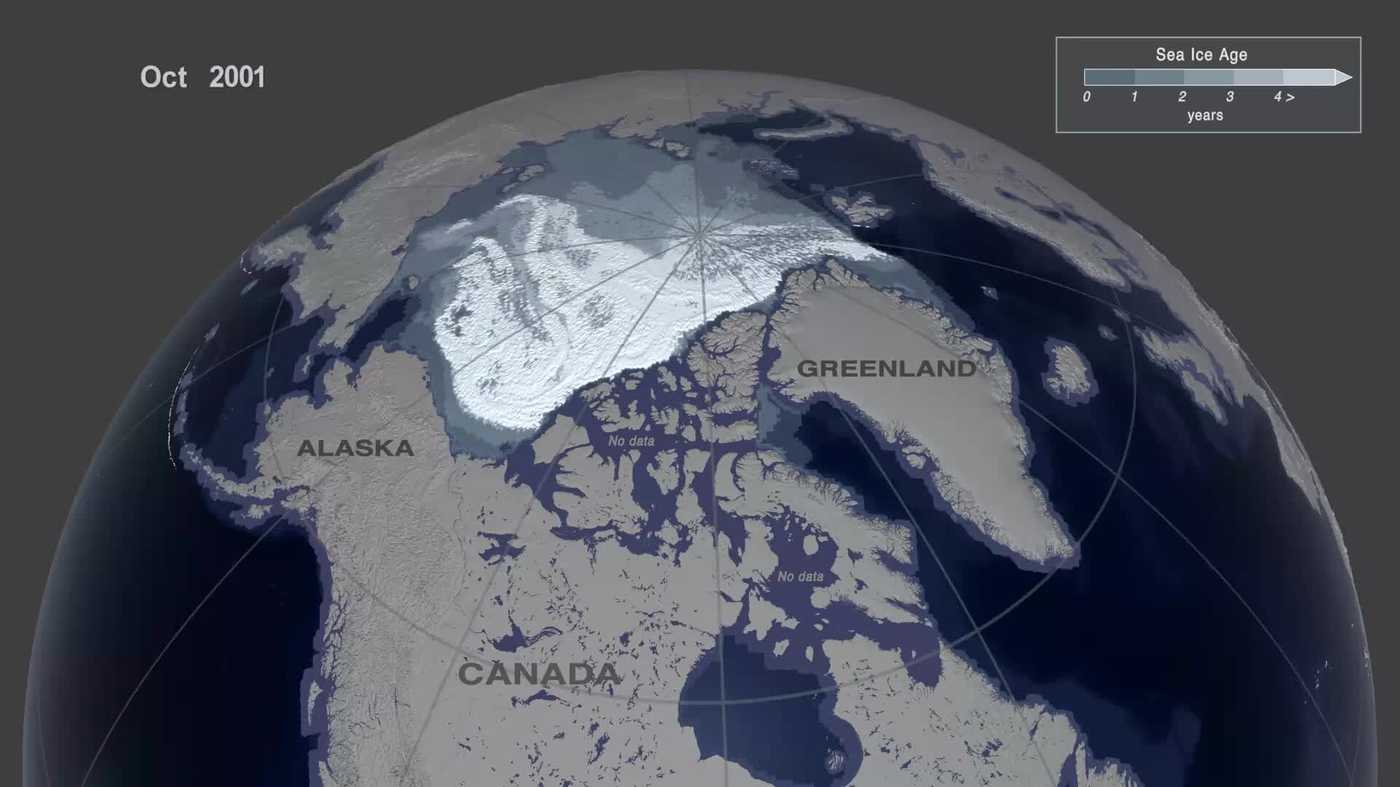
Arctic sea ice minimum ties for tenth lowest on record
Arctic sea ice likely hit its 2026 minimum on Sept. 12 at 4.60 million square kilometers, NSIDC and NASA say. That ties 2008, 2010, and 2025 for tenth lowest in the satellite era. The last 20 years are the lowest 20 minima on record.
The Arctic's summer melt season is in the books. Scientists at the National Snow and Ice Data Center and NASA say sea ice likely reached its annual minimum on Sept. 12 at 4.60 million square kilometers, or about 1.78 million square miles.
That figure ties 2008, 2010, and 2025 for the tenth-lowest minimum in the nearly 48-year satellite record. The past 20 years, 2007 through 2026, are the lowest 20 minima ever measured. The all-time low remains 2012's 3.39 million square kilometers.
Extent alone does not tell the whole story. Researchers noted loose, low-concentration ice lingering near the pole even in a relatively cool Arctic summer, a reminder that thickness and compactness matter for fall freeze-up.
Antarctic sea ice was near its seasonal maximum in late September. NASA and NSIDC said they would confirm the Southern Hemisphere peak after growth clearly stalls.
For climate watchers, the practical point is persistence: a tenth-place finish still sits deep in the modern low era. Shipping, Indigenous coastal communities, and wildlife that depend on summer ice all feel multi-year declines more than any single ranking.
Updated analyses and maps are posted on NSIDC's Sea Ice Today pages as residual melt and early freeze-up evolve.
Shipping firms watching the Northern Sea Route still face unpredictable ice and insurance costs despite the low extent ranking. Indigenous hunters and coastal villages track freeze-up timing because travel safety on ice roads depends on thickness, not just the headline square kilometers.
What we know: The 2026 Arctic minimum is pegged at 4.60 million square kilometers on Sept. 12, tied for tenth lowest.
What we don't: How fast fall freeze-up will rebuild compact ice this autumn.
Where outlets agree NSIDC and NASA both report a Sept. 12 Arctic minimum of about 4.60 million square kilometers, tied for tenth lowest with 2008, 2010, and 2025.
Where they differ Some coverage stresses that tenth place is not a new record low, while climate scientists note the entire recent decade cluster remains far below 20th-century norms.