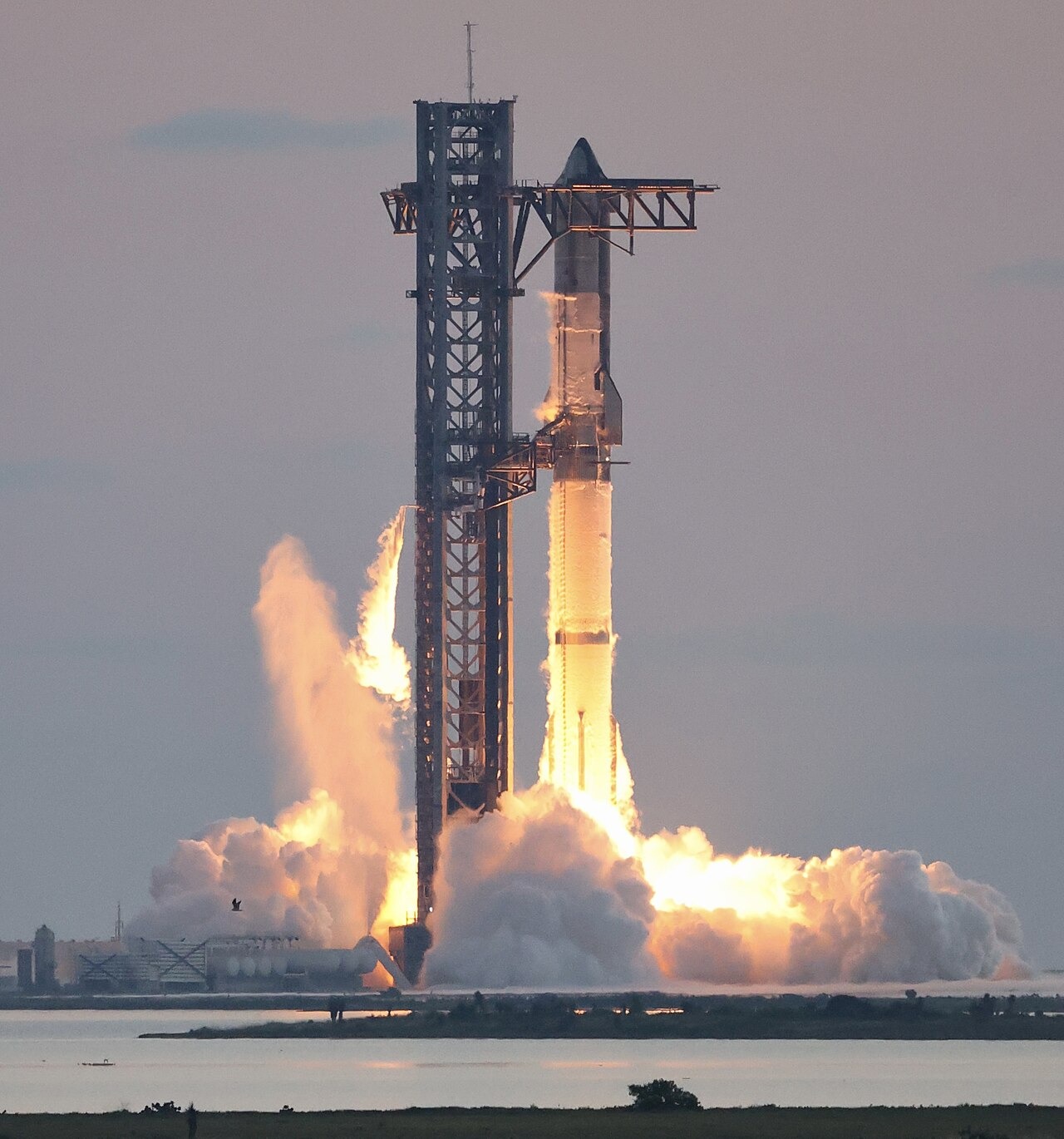
From wet dress to orbit: Flight 14’s test arc paid off
Booster 21 and Ship 41’s wet dress rehearsals set up Monday’s orbital win. Incremental tests still define Starship’s method.
Starship’s path from wet dress rehearsals with Booster 21 and Ship 41 to Monday’s orbital flight is a case study in incremental flight test. Each tanking, static fire, and suborbital hop bought data that made insertion less of a leap into the dark.
That method is slow to the impatient and rational to reliability engineers. Flight 14’s early deorbit choice shows controllers still prioritizing vehicle and public safety over completing every planned revolution.
Expect the same cadence philosophy on Flight 15 planning. Science and engineering desks will keep scoring objectives met versus objectives deferred.
Outlets agree Flight 14’s orbital success and the CAFE emissions debate are the week’s twin physical-science leads.
Space coverage is largely celebratory on milestones; climate coverage splits on the CAFE rule’s emissions math.
Named reporting on this item includes Ars Technica, Space.com, and Associated Press. Prefer those links and primary documents over undated social clips when details shift.
Booster 21 and Ship 41’s wet dress rehearsals set up Monday’s orbital win. Incremental tests still define Starship’s method.
Forecast and climate-policy cards update when agencies publish new numbers; treat long-range outlook language as provisional until the next official product.
Cross-check any sudden claim against the 3 outlets already attached (Ars Technica, Space.com, Associated Press) before resharing it.
Agency outlooks and rulemaking dockets beat viral maps. When a forecast or emissions path is the point, quote the product name and issue time from the source.
Details on this Science & Climate item can still move during Tuesday dayparts; prefer the linked outlets when a number or meeting time changes.
Where outlets agree Outlets agree Flight 14’s orbital success and the CAFE emissions debate are the week’s twin physical-science leads.
Where they differ Space coverage is largely celebratory on milestones; climate coverage splits on the CAFE rule’s emissions math.